
VCBR Community Release Paths
The Virginia Center for Behavioral Rehabilitation provides secure civil treatment for people committed under Virginia Code § 37.2-900 and related provisions. Civil commitment is not a criminal sentence, even though the campus is secure. Terms such as inmate, prison discharge, sentence credit, and jail release do not describe the governing process. The responsible court and Virginia Department of Behavioral Health and Developmental Services record the legal status.
A resident may remain in secure treatment, move within the treatment system, receive court-authorized community release under close-supervision rules, or enter criminal custody after a new arrest. Those outcomes have different evidence. A court order supports the lawful community transition. A treatment record can establish the facility status within lawful disclosure limits. A PRJ booking establishes a new adult detention episode, not release from all restraint.
| VCBR event | Correct source | Meaning |
|---|---|---|
| Court-authorized community release | Civil court order and DBHDS status record | Secure treatment ended or changed under court conditions. |
| Treatment transfer | DBHDS record | Civil custody or treatment may continue. |
| New arrest and PRJ placement | PRJ record and criminal court | Criminal detention began or continued. |
| No public result | Court clerk or lawful records channel | Silence does not establish release. |
Confirm a VCBR Community Release
There is no general VCBR inmate locator or public released-resident list in the source set. The VADOC locator is for correctional custody and supervision, not DBHDS civil commitment. PRJ’s current-custody tool covers adults held at the regional jail, not residents who remain at VCBR. Searchers must first identify the legal proceeding and court that controls the civil status.
- Identify the person and the civil-commitment case without publishing protected treatment details.
- Review the available court docket or contact the clerk for public orders and access instructions.
- Use the official DBHDS or VCBR contact for facility status that may lawfully be confirmed.
- If a new arrest is documented, search PRJ and the matching criminal case as a separate custody episode.
- Distinguish close-supervised community release from unrestricted discharge and from transfer.
A public court order is stronger than a rumor or missing search result. Even so, an order should be read for its effective terms, review dates, and conditions. VCBR treatment information may be protected. Ask for the public order or status field needed, not a broad clinical file. If the person is now at PRJ, use adult jail records only for that new booking.
VCBR Release Record Sources
The official DBHDS VCBR page is the authoritative starting point for the facility’s identity and purpose. It confirms the civil-treatment setting and provides the current agency route. Use that source to avoid similarly named correctional facilities and to find updated contact directions.
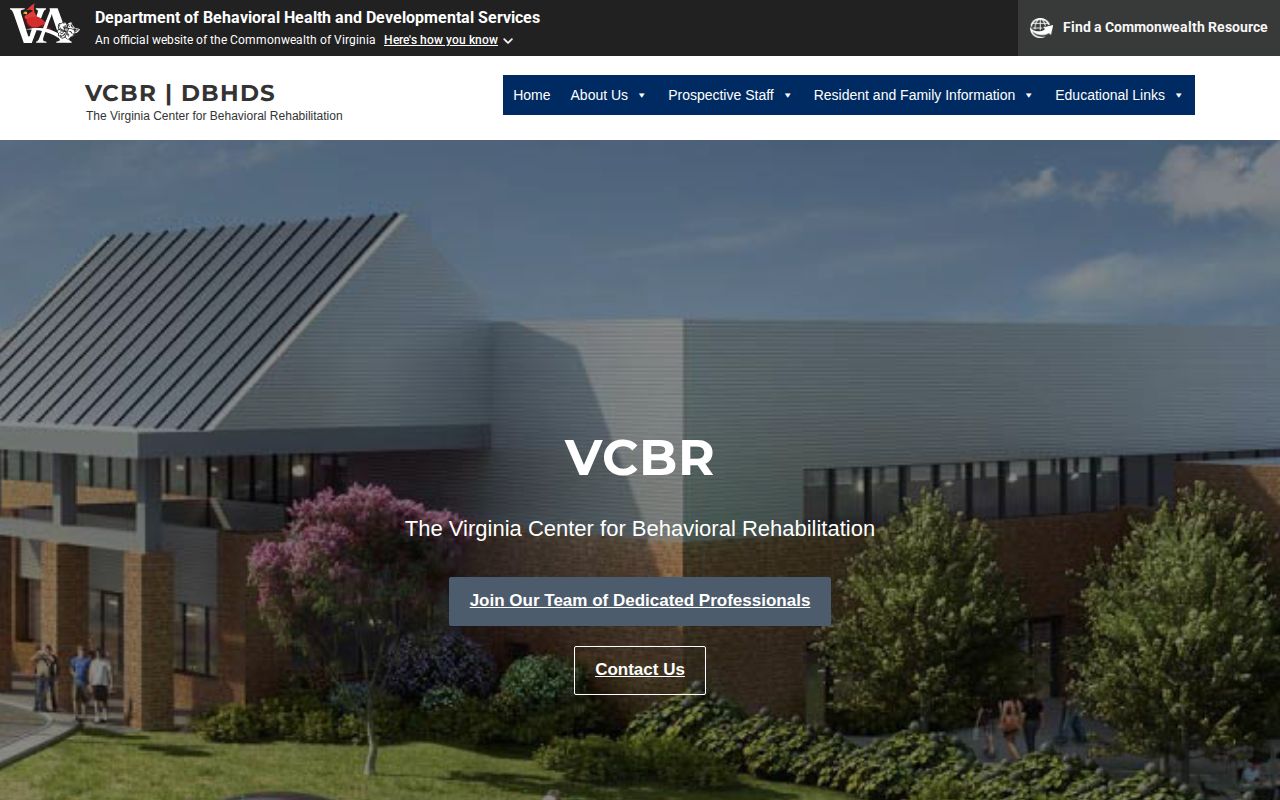
The image and linked page establish the agency boundary, not any resident’s status. Individual confirmation depends on the court and what DBHDS may lawfully disclose. A request should name an existing public record, such as a public order or nonclinical status document, and should avoid asking staff to create a summary. Medical and treatment content has stronger privacy limits than an adult jail booking log.
Virginia FOIA procedures generally require a reasonably specific request and permit actual-cost charges. Agencies can redact or withhold protected material while providing segregable public parts. No VCBR-specific release-record fee, public counter schedule, or general resident-status line appears in the research. Those details must not be invented. Check the official page for current routing before sending a request.
VCBR Nottoway Campus Contact
VCBR is identified at the Nottoway Campus in Burkeville, Virginia. The source material does not provide a verified street address, direct telephone number, or public records hours for publication. The facility card therefore states only what the official research supports. Use the linked DBHDS page for current contact information rather than copying details from an unrelated Nottoway correctional facility.
Nottoway Campus
Burkeville, Virginia
Operating agency: Virginia Department of Behavioral Health and Developmental Services
Current routing: official DBHDS VCBR page
Nottoway Correctional Center and Nottoway Work Center also operate in Burkeville, but they belong to VADOC. Their phone and mailing details must not be assigned to VCBR. Piedmont Regional Jail is in Farmville and has a separate authority. Accurate contact starts with the operator, not the town name.
- Civil commitment
- Court-ordered secure treatment under civil law, not a prison sentence.
- Community release
- A court-authorized move from secure treatment into the community, often with defined oversight.
- Close supervision
- Conditions and monitoring imposed under the civil-release framework.
- Criminal detention
- Custody tied to an arrest or criminal court, such as a new PRJ booking.
VCBR Court Release Meaning
A court-authorized release from VCBR is not calculated through earned sentence credits. There is no VADOC Release Date field for the civil commitment. The court considers the governing civil process, and the order defines whether community placement is authorized and under what terms. Search language should preserve that distinction.
Close-supervised release is not the same as final freedom from every condition. The public order may state the legal framework, while treatment and monitoring details remain restricted. A later return to secure treatment should not be called a new prison sentence unless a separate criminal case supports that label. Conversely, a new arrest creates a criminal matter even though the person’s earlier status was civil.
When a public court docket is available, match the name, case number, jurisdiction, and order date. Obtain a certified order from the clerk when the exact legal status matters. The docket records the court event; DBHDS records the treatment placement. Neither should be replaced with the Nottoway adult jail roster.
The requested record should match the question. A public civil order may show whether the court authorized a community placement and whether close supervision remains part of the legal status. DBHDS is the source for an existing facility-status record that it may lawfully disclose, but protected clinical details do not become public merely because a release question was asked. If a later PRJ record shows a new arrest, keep that booking date and criminal case separate from the civil order. The jail record can confirm entry into or departure from PRJ custody; it cannot prove that the civil court ended every VCBR condition. This record-by-record approach preserves the line between treatment, community release, and new criminal detention.
VCBR Arrest Transfer Is Custody
Virginia budget materials provide a distinctive Nottoway example. A 2026 state budget item describes a newly arrested VCBR resident being held at Piedmont Regional Jail at Nottoway’s expense. That move is not community release. It is a transfer from civil treatment into criminal detention tied to a new event.
The correct follow-up begins with PRJ’s current-custody lookup, the PRJ booking record, and the new criminal court case. If PRJ later reports a transfer to VADOC, BOP, another jail, or another custodian, custody still continues. If a court later authorizes return to treatment, that is another change in legal setting. Each step needs its own source and date.
This example is why “left VCBR” is too vague. It can describe lawful community release, a treatment move, or an arrest followed by jail custody. State the supported event. Do not place civilly committed residents into an adult released-inmate list, and do not infer a community return from physical absence.
Note: A PRJ booking after a VCBR arrest documents criminal detention; it does not convert the earlier civil commitment into a prison sentence.
Nottoway Facility Release Boundaries
Nottoway’s facility map crosses four systems. Piedmont Regional Jail holds adult local, state, and USMS populations. Nottoway Correctional Center and Nottoway Work Center are VADOC correctional facilities. Piedmont Regional Juvenile Detention Center is a confidential child-custody setting. VCBR is secure civil treatment under DBHDS. A search must follow the operator and legal status.
For PRJ, an adult release record and Jail VINE may document a custody change. For VADOC, use the statewide locator, time-computation material, and inactive-offender record. Juvenile status follows protected court channels. For VCBR, use the civil court and DBHDS. These routes cannot be substituted for one another merely because all serve or sit near Nottoway.
The Nottoway County release-record overview helps distinguish jail release, prison discharge, supervision, and transfer. Its adult search routes do not make VCBR a corrections facility. The civil court order remains central when the question is community release from behavioral rehabilitation.